"He likes deep colors. But before the drama
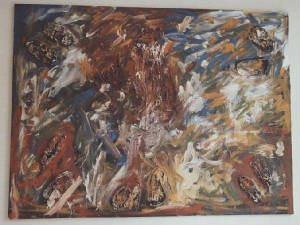
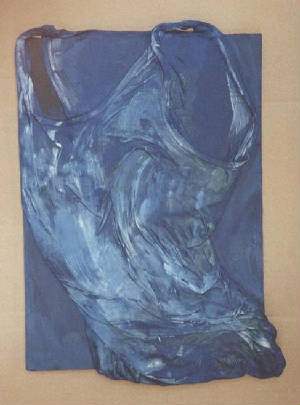
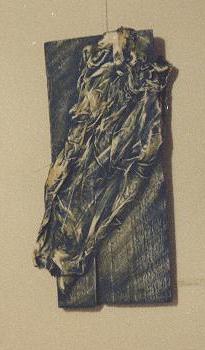
can make an impression on our feelings, he overturns the approaching sentimentality. With the brush, using rough collage elements
and alienating details. As if for him the experience of reality can only be real with a pinch of irony. History as tragedy
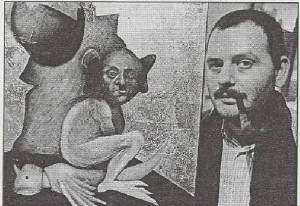
or farce... Moroz thinks there is no point in wishing to present history straight. In a strangely moody picture the writer
Gogol is confronted by his evil genius. There, in an "icon" framed by rough table legs, are trampled Papyrossi under
a martyr's face. The holy is turned to sham. From the real, the artificial.
HE FINDS OUR SOCIAL STRUCTURE
"MURDEROUS"
"My realism", says Moroz, "is an attempt at spiritual
realism. The material of the object is questioned. Matter is the "shadow of the spirit". For the 35-year-old, nature
is "the shadow of the soul". So we have to begin with "measures to protect the soul" before "measures
to protect nature". "Our social structure is suicidal", driven by indifference and apparatchiks who are concerned
less with the future than with the period of legislation. "We don't go in for the dialogue we need, but talk
over each others heads in monologues and suppress everything"...
Moroz
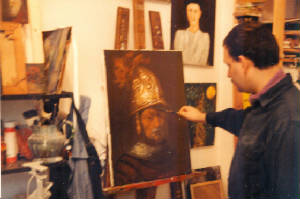
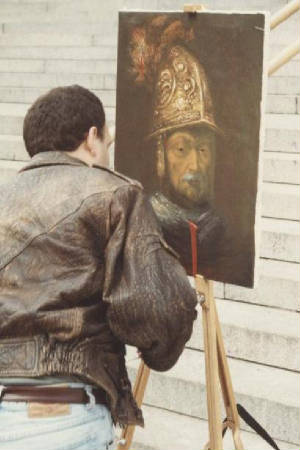
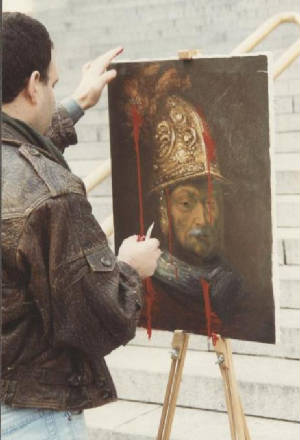
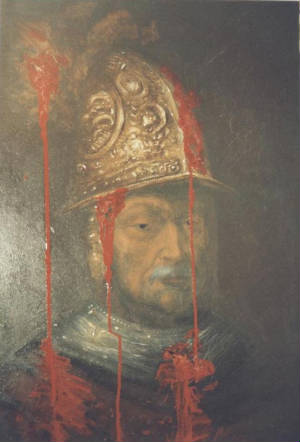
can work just about any style. And researches style to that end. For a long time he has been fascinated by
Rembrandt's brushwork. When the scientists pronounced the "Man with Golden Helmet" to be inauthentic, and therefore
the work of a pupil, the young emigrant questioned the verdict vigorously.
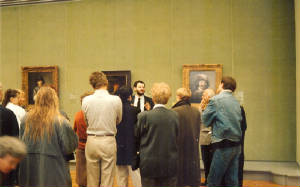
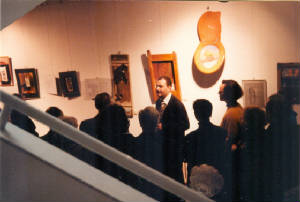
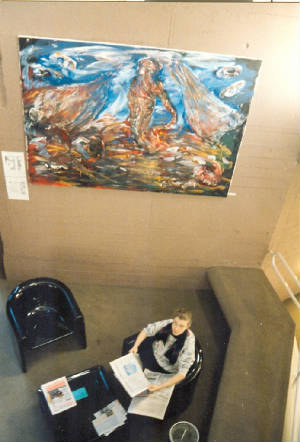
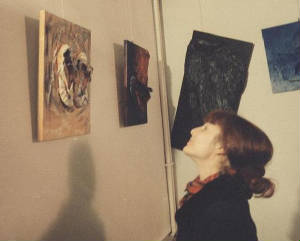
As the picture collection in the Steglitz Institute
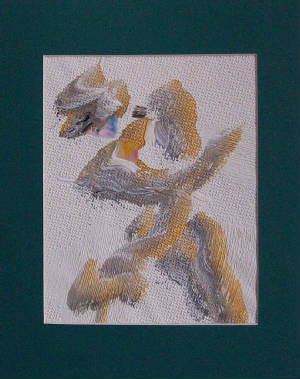
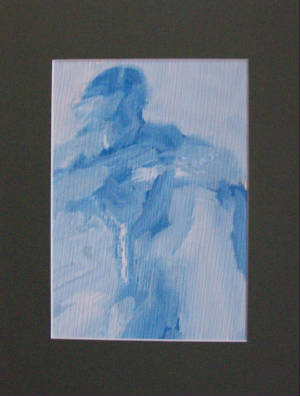
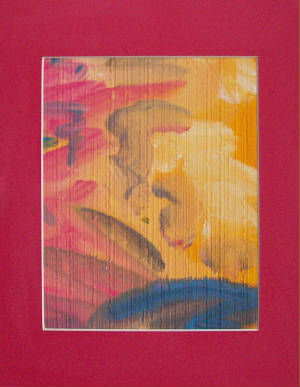
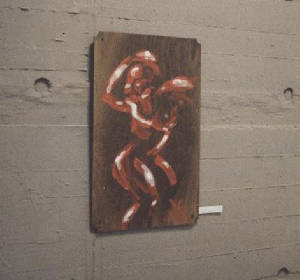
shows, he has tried almost every style. He was a meditative painter of icons, a Romantic, an Expressionist and a Surrealist.
Also a spontaneous collage-maker for ballet scenes, an exciting project to which a whole section of the show is set aside.
Or he belongs to the Neo-Dadaists. In the inspirational style of the artists group "Turpentine", whose members mostly
live in Paris, Moroz used discarded objects to point critically at his times. Taking an old children's pram, he placed
a black doll in it and covered the doll with a ripped protective glove of the type used for training dogs. When this "installation"
was taking shape, no foreigner's hostel in Germany had yet been set on fire.
How does he feel about living in Germany? "Like
a chicken on the grill, a 'Rubber Eagle' as the Berliners say. But I carry on. Like a fighting cock. The feathers
that get pulled out grow back again in the end." There is his self-portrait, "Me in Germany, or the "Rubber
Eagle's Sense of Justice". In this role Moroz sees himself lying on the ground. And the Evil Genius of renascent
violence squats on top of him. The background is strangely gilded. This stylistic device comes from the Russian icon tradition
and heralds the way to the Kingdom of Heaven. The double concept of the picture rocks back and forth. Plenty of sarcasm- and
just as much hope."
(Excerpts from the essay by Ingeborg Ruthe, Max Planck Institute Exhibition, Berlin, Germany,
1992)